

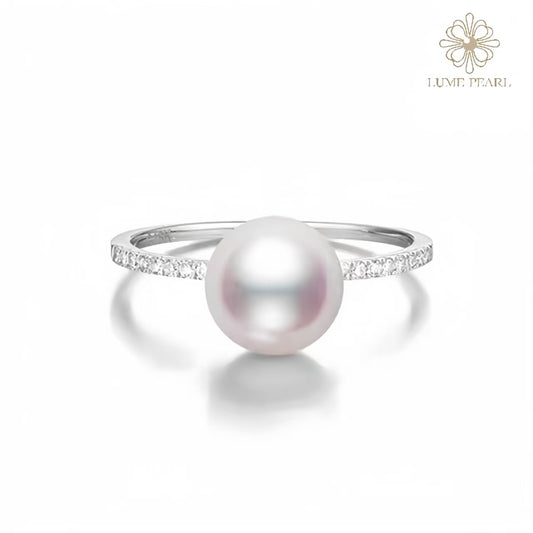


Akoya vs. Freshwater Pearls: Key Differences & How to Choose
20 Oct 2026
0 comments


31 October 2026
31 October 2026
Akoya and freshwater cultured pearls are both real pearls, but they grow in different environments and can have different typical appearances. Neither type is automatically better for every shopper. The right choice depends on the look, size, budget, and care preferences that suit you.
Akoya pearls are saltwater cultured pearls. They are commonly round, white or cream, and known for bright luster. Many are smaller than 9 mm, though sizes and colors vary. Akoya pearls are often chosen for classic strands and polished, formal styles.
Freshwater pearls are cultured in freshwater mollusks and come in a wide range of colors, shapes, and sizes. Some are near-round, while others have more organic forms. Culturing methods also vary: smaller freshwater pearls are often non-bead cultured, while larger ones may be bead cultured. The term “freshwater” alone does not tell you whether a pearl has a bead nucleus.
Look at the individual pearls rather than relying on the type name alone. Consider size, shape, color, luster, surface, nacre, and how well the pearls match in a strand or pair. These factors help describe a pearl’s appearance and quality. Photos taken in natural light can help you assess color and luster, while product specifications should state the pearl type and measurements.
If you prefer a classic, uniform strand, compare Akoya and round freshwater options side by side. If you like a more individual look, explore freshwater styles with varied shapes. Browse our saltwater pearl jewelry, freshwater pearl jewelry, and pearl necklaces. Check each product page for exact materials, sizes, and options.
Pearls are relatively soft and can be scratched or affected by chemicals. Put pearl jewelry on after perfume, hairspray, and cosmetics; keep it away from acids and harsh cleaners; and wipe it gently with a soft, clean cloth after wearing. Avoid ultrasonic and steam cleaners.
Thanks for subscribing!
This email has been registered!

Take 15% off your first order
Enter the code below at checkout to get 15% off your first order


